How AI Robs Us And What To Do About It
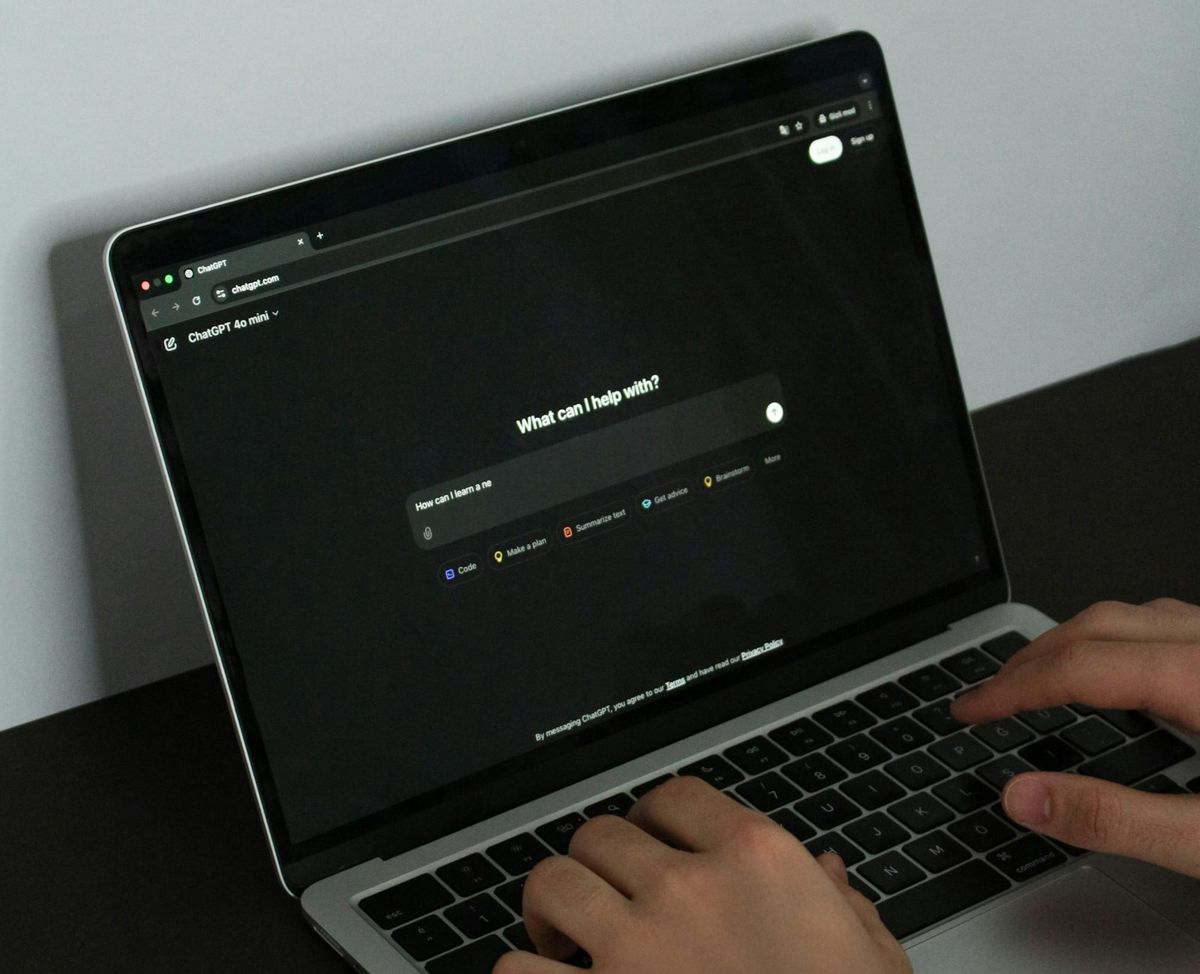
Is this what our lives has come to?
We just tell the AI what to do and it does our job for us?
What has been the purpose of my professional training and experience thus far?
These are just some of the questions that's been swirling around in my head since the introduction of AI tooling in my industry.
I'm a programmer and software engineer by trade – I started in the industry in 2017, and I've been coding pretty much every weekday since then.
But over the last 9 months, I've coded very little due to the introduction of AI coding agents in our industry.
Thanks to AI, I now read a lot of code, but I do very little of the manual typing of programs that I used to. Most of my job is now dealing with AI:
- "Engineering" the AI to produce more effective code.
- Writing good prompts.
- Reviewing the work outputted by AI.
While this has done wonders to the overall output of myself and teammates around me... it's left me, and at least one other person on my team whom I talked to recently, feeling a bit shaken and we have a bunch of questions:
- What is our value in the marketplace if any one of us can write code as effectively as anyone else, regardless of our past experience and domain expertise?
- Will this all settle down, and will we find something useful to do, or will our job market shrink?
- Will I have the same job in a year? Do I need to be learning new skills? Which ones?
Some of this is anxiety inducing. Some of it is a bit doom-and-gloom. And if you've been doubting your own skills and value in the marketplace... you're probably not alone.
Is this how we should feel about our future going forward? What do we do in response to this new age of AI we now live in?
These questions has been gnawing at me for the last several months, so I gave it my thought.
This blog post is my answer.
Create Something Every Day Without The Help of AI
But why?
I can hear the skeptics.
Can't we produce the same output in a fraction of the time and effort with the help of AI?
Yes... and this is inextricably linked to why you might want to consider creating more without the help of AI.
I probably sound crazy, so let me explain.
You might already intuitively understand why, but just haven't given this line of thinking much attention.
Here's a simple question:
What are the benefits of doing something (that AI can already do) without the help of AI?
When I did this exercise, I realized that the process of creation is inherently valuable. If you can wave a magic wand and create anything you wanted, there's something inherent about you actually making that thing that gets lost.
What is that thing about the creative process?
Here's the list that I came up with.
Thing 1: Satiation of a Creative Drive
Back in 2017, my wife and I hiked the 4-mile trail to Glacier Point in Yosemite national park.
The views at the top of Glacier Point were stunning, but there was something disappointing about how crowded it was. I couldn't help but noticed that there were way more people at Glacier Point than there could possibly have been based on the number of hikers we saw on the trail.
"Was there another trail leading up to Glacier Point? Was there some other way to get here...?" I wondered.
As I made my way towards the crowd of people I noticed what was going on.
Right around the corner, there was a big parking lot of cars.
You could simply drive up to Glacier Point to get the views without the hike!
I was definitely amused, observing all of these people who got the view without the effort. I had no regrets as I thoroughly enjoyed the hike. I knew that I wouldn't have felt the same had I driven up there.
But this experience left me wondering... Why is hiking to the top of a mountain so satisfying?
The answer is surprisingly simple. It's not about the view at the top. The satisfaction we feel has much more to do with how difficult it was to attain the view at the top.
The satisfaction we feel is not inherent in the view. Because if it were, we should be able to drive up the mountain and feel the same amount of satisfaction. But we don't.
We hike mountains precisely because it's harder than driving up the mountain.
The journey is fulfilling because it is hard.
It's the same thing with making something.
Fulfillment is extracted from the difficulty of it.
It's not about how useful what you make is. Or how popular it is. Or any other attribute about the object.
It might even be reasonable to say that the technical definition of fulfillment is the satisfaction you feel from completing something of sufficient subjective difficulty.
If you want to satiate a creative drive, make something without the help of AI. It'll be more fulfilling.
Thing 2: A Focused Mind
Perhaps the most deceptive reality of AI is the extent to which it makes us unhappy. Or put more accurately, the extent to which it robs us of a state of happiness.
I realize how strange this might sound, because I, too, benefit from the use of AI and its ability to allow us to produce more stuff efficiently and do better work at my job.
It sounds great on paper. AI makes us more productive. Therefore we can achieve more.
Wouldn't you think that this would help us lead happier lives, at least in part, because of the outcomes we're able to achieve through the extra productivity?
To this point, I pose some questions:
- What has been your experience of using AI been like?
- Has it made you more at peace?
- More content? More happy?
This was not the case for me.
I've personally discovered through a lot of trial and error, that the happiness I feel is NOT tied to the outcomes that I achieve.
I'm fortunate enough to have been able to double my income several times in my life by switching careers and my line of work... And I'm not any happier as a result of the money.
I had heard phrases like, "money won't make you happy" or "money can't buy happiness", but had to learn this for myself the hard way, by trying to be monetarily successful and realizing that no amount of success was going to do it for me.
But even after learning that money won't make me happy, I was still left with the elusive question: what can create happiness in my life?
In hindsight, I never really understood what was going on till I understood the nature of happiness.
I like how Dr K from HealthyGamerGG (look him up on YouTube!) explains this:
There is a technical definition of happiness. Happiness is a one pointedness of the mind.
The fewer things your mind is focused on, the happier it feels. That's it. It has nothing to do with the outcomes you achieve.
An easy-to-understand example of this is to see a child and observe their feelings about a new toy.
They seem genuinely joyous about the new toy.
But as soon as you take them to a toy store where there are a thousand other toys that they can't have in their possession in that moment, you rob them of that joy. Or when they encounter a friend who just so happens to have a better or different toy... Then all of a sudden they don't seem as content with their toy. And they were joyous about it just moments ago.
What gives?
Happiness is fractured by the introduction of thoughts that distract us from the once joyous thoughts we were having. Unhappiness comes from a fragmented and distracted mind.
The more we are able to cultivate a focused mind, the more moments of bliss and happiness we will feel.
This is why it feels so good to
- Be "in the moment" while making music.
- Or to be fully present in a conversation with a good friend.
- Or, as Gen Z like to say, be "locked in" on a task.
The fundamental truth to using AI to complete a task is that it strips away the need for your focus and attention.
So now, you have a brief moment of focus where you generate a prompt. You hit "enter", then your mind wanders as AI generates an answer. And within a few moments, the output of the work is generated...
But you didn't do any of the work. At least not in any traditional sense of the word where focus, attention, and effort are required.
Is it of any surprise that we don't feel particularly rewarded or happy given that our "work" no longer requires a substantial amount of focus over a long period of time?
Happiness comes from cultivating focus, not what you create.
Thing 3: Cognitive Exercise
Performing a cognitive task is like working out for your brain, just like physical exercise is a work out for your body. This analogy clarifies this simple truth:
Just because we can lift that weight with a machine, doesn't mean we shouldn't lift that weight manually.
Why lift things manually?
Because it makes us physically stronger. It also helps us exercise self control. It makes us more disciplined.
Before the machinery, we had no choice but to lift things manually. But now, the machinery makes us much more efficient. We lift more per unit of human effort. This is incredible from a productivity standpoint.
But just because it's effective and efficient doesn't mean it's always appropriate. We know that it won't make us physically stronger or more fit. In fact, it may just have a deteriorating effect unless we take care to sometimes lift things manually.
We now live in a world where we have to consciously exercise cognitive skills, despite having the machinery to do cognitive tasks for us automatically.
AI can code, create a topic outline, create a spreadsheet, create videos, and more.
This is great for productivity, but if the thing you're outsourcing to AI is what helped you stay in decent cognitive condition, then it may be wise to take a step back and assess whether you should be outsourcing all of your work to AI.
We now have to go work out our minds despite our inherently lazy tendencies. We have to make a greater effort to avoiding cognitive atrophy. We must exercise discipline and self control in a world where everything is getting easier to accomplish.
Contrary to what AI mandates in businesses might have you believe... creating without AI will only become more valuable.
In the long run, I think the people who can make stuff without AI will stand out. Not just for their unique creative output, but because they'll be able to exercise more self control and discipline throughout the course of their life.
I'm not suggesting that you stay away from using AI.
AI is an incredible tool that lets us output more artifacts.
We can now make more stuff, in less time, and less effort than before.
In a world where we are are valued by the output of our work, this is music to our ears. By all means, use AI to be more efficient.
But...
Just acknowledge the trade that you are making.
- You're no longer lifting the proverbial boulder. You'll need a replacement for cognitive workouts.
- You won't feel fulfilled prompting all day as it's generally not unique to you nor does it require a significant amount of focus and attention. It needs to be a task of sufficient subjective difficulty. You'll need a replacement to satiate your creative drive.
- You won't be able to cultivate a state of one pointedness by jumping around different prompts, reviewing AI work, and prompting some more. You'll need a new way to focus your mind.
Even then... it's still going to make sense in many cases to opt for efficiency and use AI. Especially in a work context where companies are competing to create value in the world as efficiently as possible.
However, on the personal front, there's a lot of uncertainty when it comes to what is an appropriate amount of AI usage.
I certainly don't have all of the answers.
But one thing I do know is that we will pay a personal price by making this trade 100% of the time.
You might want to save those last few percentage points to actually create something from start to finish without relying on AI.
In the last 9 months, I've been using AI so much that I've lost touch with this simple truth:
It's the process that helps us enjoy our time. Not the resulting byproduct of the process.
If you're looking for inner peace and satiation of your creative spirit, then be sure to devote some time to make stuff that's uniquely yours... without the influence of AI.